
Espresso, latte, cappuccino, flat white, mocha—every coffee menu throws these words at you like you're supposed to already know the difference. This guide breaks down every major coffee type in plain language, so you can order with confidence next time.
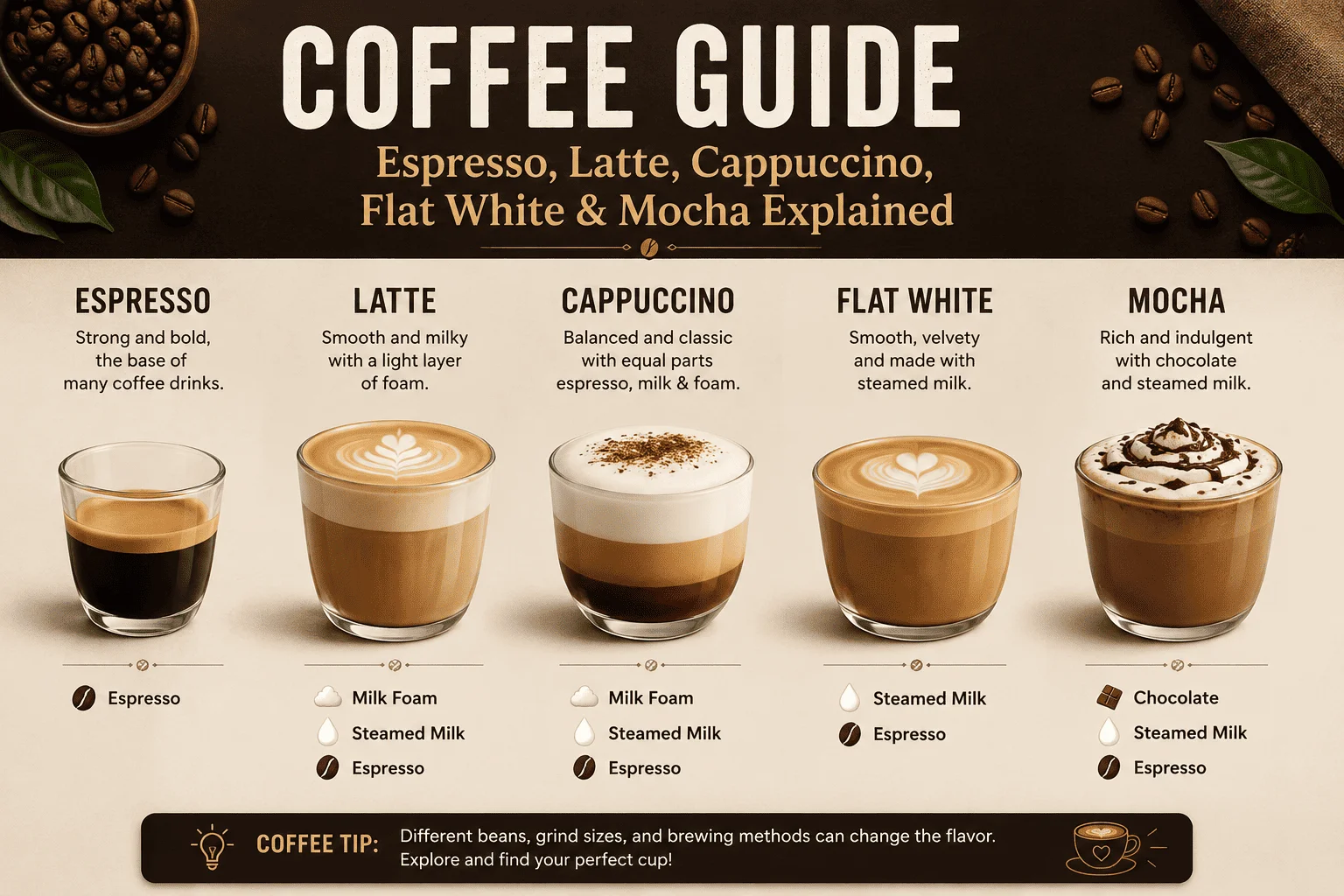
Walk into any café today and the menu can feel like a foreign language. Espresso, latte, cappuccino, flat white, mocha, cortado, americano—the list keeps growing, and most menus don't bother explaining what makes one different from another. If you've ever stood at the counter unsure what to order, or quietly picked the same drink every time because you weren't sure what the others actually were, this guide is for you.
Understanding coffee doesn't require a barista certification. Once you know the handful of building blocks—espresso, steamed milk, and milk foam—almost every drink on the menu makes sense. This guide walks through the basics of espresso, breaks down the real difference in the latte vs cappuccino debate, explains what is flat white coffee actually is, covers the most common coffee types, and ends with recommendations for the best coffee for beginners.
Before getting into lattes and cappuccinos, it helps to understand espresso, because nearly every popular coffee drink is built on top of it. Espresso is not a bean, a roast, or a flavor—it's a brewing method. It's made by forcing hot water through finely-ground coffee at high pressure, producing a small, concentrated shot topped with a layer of golden-brown foam called crema.
A single shot of espresso is typically around 30ml, and it's intensely flavorful compared to drip coffee. It's also the base for almost every milk-based drink you'll find on a menu. When you order a latte, cappuccino, flat white, or mocha, you're really ordering espresso combined with different amounts of steamed milk and foam.
This is why understanding espresso is the real key to understanding coffee menus. Once you know that espresso is the constant and milk texture is the variable, the rest of the menu stops being confusing.
Two variations worth knowing are ristretto and lungo. A ristretto is a "restricted" shot—less water is used, so the result is smaller, more concentrated, and slightly sweeter. A lungo is the opposite—more water is passed through the grounds, producing a larger, slightly more diluted, and more bitter shot. Neither is better than the other; they simply suit different taste preferences.
This is probably the most common coffee confusion out there. Both drinks contain espresso and milk, both are served warm, and both look somewhat similar in a cup—so what actually separates a latte from a cappuccino?
The answer comes down to ratio and texture. A cappuccino is built from equal parts espresso, steamed milk, and thick milk foam—roughly a third each. This gives it a strong, bold coffee flavor with a thick, airy foam cap that holds its shape. A latte, on the other hand, uses much more steamed milk and only a thin layer of foam on top, making it smoother, milkier, and less intense in coffee flavor.
In simple terms: cappuccino is coffee-forward with a thick foam cap, while latte is milk-forward with a light foam layer. If you enjoy a stronger espresso taste with texture and body, cappuccino is the better choice. If you prefer a smoother, creamier drink where the espresso is softened by milk, latte is the way to go.
Size also plays a role. Lattes are typically served in larger cups because of the higher milk volume, while cappuccinos are traditionally smaller and more concentrated. This is one of the reasons people searching latte vs cappuccino often assume it's just about size, when really the milk-to-foam ratio is what defines each drink.
The flat white has become a global favorite, but a lot of people still aren't sure what separates it from a latte. So, what is flat white coffee exactly?
A flat white is made with espresso and steamed milk, similar to a latte, but with a key difference: it uses a smaller amount of milk with a thinner, denser layer of microfoam, and it's typically served in a smaller cup. This means the espresso flavor is more pronounced than in a latte, while still being smoother and creamier than a cappuccino.
Another distinguishing feature is the microfoam itself. Flat white foam is velvety and finely textured, almost silky, rather than the thick, airy foam found on a cappuccino. This texture integrates more smoothly with the espresso, creating a balanced, rich drink without being overwhelmed by milk.
In short, if a latte is milk-forward and a cappuccino is foam-forward, a flat white sits right in the middle—strong coffee flavor, smooth texture, and less volume overall. It's a great choice for someone who wants the creaminess of a latte but with a bolder espresso presence.
A mocha takes the basic latte formula—espresso and steamed milk—and adds chocolate syrup or cocoa powder into the mix. The result is a rich, slightly sweet drink that sits somewhere between a coffee and a dessert. It's often topped with whipped cream and a chocolate drizzle, making it one of the more indulgent options on a coffee menu.
Mochas are especially popular among people who enjoy coffee but find straight espresso drinks too intense. The chocolate softens the bitterness of the espresso while adding sweetness and depth, making it an easy entry point for people newer to coffee.
Beyond lattes, cappuccinos, and flat whites, there are several other common coffee types worth knowing. Here's a quick breakdown of the most popular ones you'll come across on almost any menu:
Each of these drinks offers a different balance of strength, texture, and volume, so trying a few of them is the easiest way to figure out what actually suits your taste.
If you're new to coffee, jumping straight into a straight espresso shot can be overwhelming. The intensity and bitterness can be a lot to handle before your palate adjusts. So what's the best coffee for beginners?
A latte is usually the safest starting point. Because it contains a higher ratio of milk to espresso, it eases you into coffee flavor without overwhelming bitterness. The creaminess also makes it approachable for people who aren't used to strong drinks yet.
A mocha is another excellent beginner option, especially for people who enjoy sweeter flavors. The chocolate masks some of the espresso's intensity while still giving you the caffeine boost and coffee taste.
If you want something a step up in coffee flavor but still smooth, a flat white is a good next move. It offers more espresso character than a latte while remaining creamy and balanced.
Once you're comfortable with those, cappuccino, cortado, and eventually straight espresso become much easier to enjoy, since your palate has already adjusted to stronger coffee flavors.
A few practical tips can make ordering coffee much less intimidating:
Coffee isn't just a caffeine delivery system—it's a daily ritual for millions of people, and understanding the differences between drinks makes that ritual more enjoyable. Knowing the difference in the latte vs cappuccino comparison, understanding what is flat white coffee, and knowing your way around basic coffee types means you're no longer just guessing at the counter—you're actually choosing a drink that fits your taste.
It also opens the door to exploring more. Once you understand the basics, you can start experimenting with different milk types, flavored syrups, or brewing methods like cold brew and pour-over, expanding your coffee experience well beyond the standard menu.
Coffee doesn't have to be confusing. At its core, almost every popular drink is built from the same two ingredients—espresso and milk—combined in different ratios and textures. Once you understand that foundation, the entire menu opens up.
Whether you're comparing latte vs cappuccino, wondering what a flat white really is, or simply looking for the best coffee for beginners, the goal is the same: find the drink that matches your taste, and order it with confidence.
For more guides like this, keep exploring our coffee and drinks guide and discover the best ways to enjoy your daily cup.
Looking for more options? Explore our list of
best restaurants in North Nazimabad Karachi
.
best restaurants in Clifton Karachi
.
best restaurants in Korangi Karachi
.
best restaurants in Dha Karachi
.
best restaurants in Bahadurabad Karachi
.